Key Takeaways
- Most sagging doors are caused by loose hinges, swollen wood, or a shifted door frame
- You can fix 80% of sagging door problems with a screwdriver and longer screws
- Toronto’s seasonal humidity is a major culprit, especially in older homes in areas like East York, Etobicoke, and Scarborough
- Know when to call a pro: if your frame is visibly warped or your foundation has shifted, this goes beyond a DIY fix
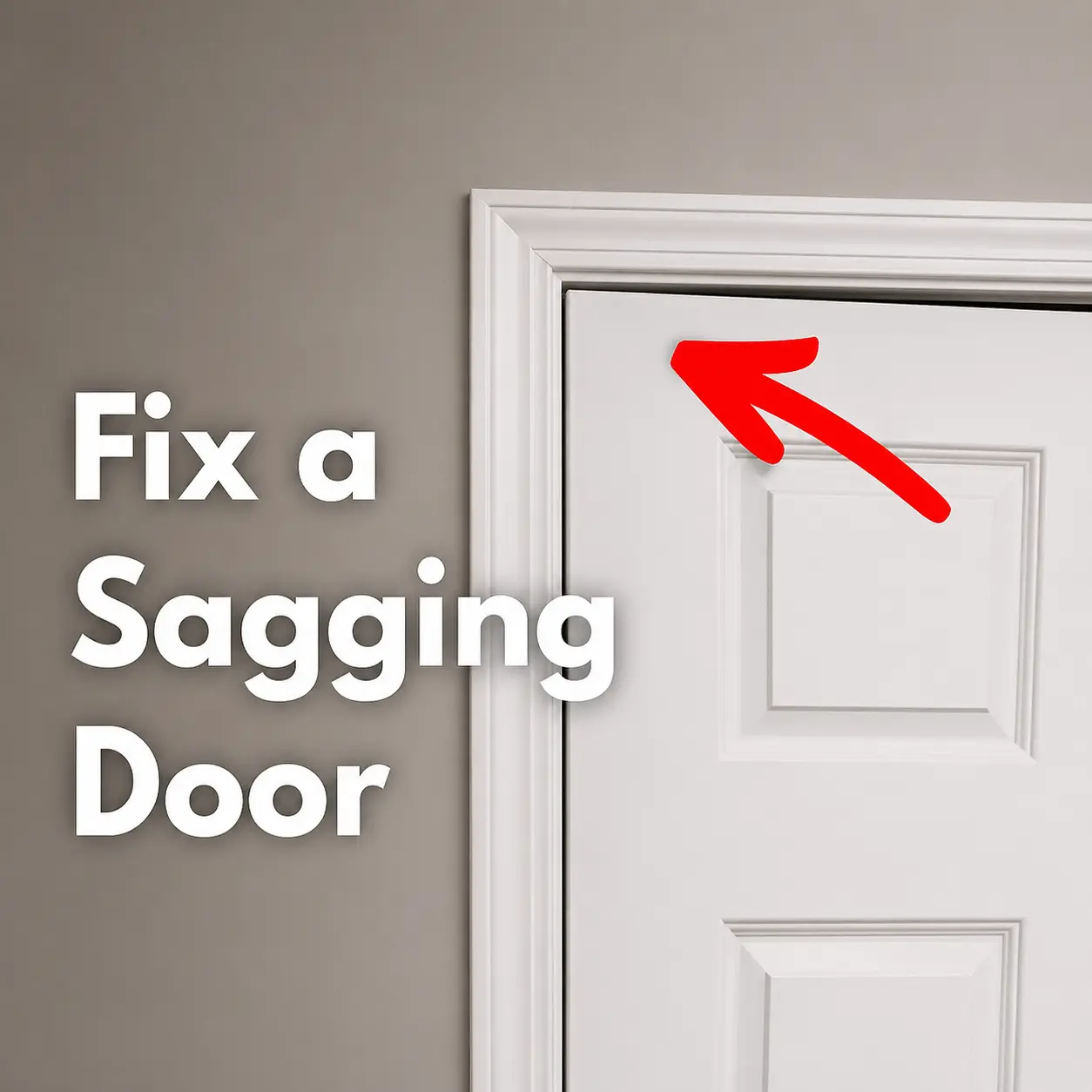
Watch this guide on how to fix a sagging door and spot common problems.
What Causes a Door to Sag?
| Cause | Common In | DIY Fix? |
|---|---|---|
| Loose hinges – the most common cause, especially in homes over 10 years old | All homes | Yes |
| Stripped screw holes – the screws spin but don’t grip anything | Older homes (pre-1980s) | Yes |
| Warped wood or swelling – common in Toronto winters and humid summers | Older wood doors, Summer/Winter | Sometimes |
| Foundation settlement – the frame itself has shifted | Older GTA homes | Call a pro |
Tools and Materials You’ll Need
- Screwdriver (manual or power drill)
- 3-inch wood screws (grab a box from Home Depot or Home Hardware)
- Wood glue + wooden toothpicks or golf tees
- Hand plane or belt sander
- Paint or wood sealant (optional)
- Carpenter’s square
- Hammer and chisel (for hinge adjustments)
Step-by-Step Fixes
Fix 1: Tighten the Hinges (Start Here First)
This solves the problem more often than you’d think. Open the door and check every hinge screw. Try tightening them with a screwdriver.
- Open the door and inspect all hinge screws
- Tighten every screw with a screwdriver
- Close the door and test it
- If screws spin freely and won’t tighten, the holes are stripped – move to Fix 2
Fix 2: Fix Stripped Screw Holes
If the screws just spin endlessly, the holes are stripped.
- Remove the hinge from the door frame
- Dip wooden toothpicks or a golf tee in wood glue
- Pack them into the stripped hole until full
- Let dry for at least 1 hour
- Snap off the excess flush with the wood surface
- Re-install the hinge using 3-inch screws that reach the wall stud behind the frame
- Test the door
Pro Tip: Skip the toothpicks and go straight to 3-inch screws. Driving a long screw past the door jamb and into the wall stud is often enough on its own and takes 5 minutes.
Fix 3: Replace Hinge Screws with Longer Ones
If the existing screws are short (most builder-grade homes use 3/4-inch screws), swap them for 3-inch screws.
- Remove one hinge screw at a time from the top hinge
- Replace with a 3-inch screw driven into the stud behind the jamb
- Repeat for all hinge screws
- Test the door after each hinge
Fix 4: Plane or Sand a Swollen Door
If the door still rubs after fixing the hinges, the door itself may need trimming. This is common in Toronto homes during summer humidity when wood swells.
- Identify exactly where the door is rubbing (use a piece of paper to find the tight spot)
- Remove the door from its hinges
- Mark the problem area with a pencil
- Use a hand plane or belt sander to shave small amounts off the marked area
- Test-fit the door frequently, removing only what you need
- Seal or paint the raw wood edge immediately to prevent re-swelling
Pro Tip: Before planning, wait until a dry stretch of weather in summer. Sometimes swollen doors fix themselves once humidity drops. Run your AC or a dehumidifier for a few days first.
Fix 5: Adjust the Hinge Mortise
If the door hinge sits too deep or too shallow, it throws the door out of alignment.
- Hinge sits too deep: Add a cardboard shim behind the hinge leaf to bring it forward
- Hinge is too shallow (sticking out): Use a chisel to deepen the mortise slightly
Fix 5: Adjust the Strike Plate
Sometimes the door closes but the latch doesn’t catch properly. The strike plate (the metal piece on the frame) may just need to be moved slightly.
Loosen the screws, shift the plate up or down a few millimetres, and retighten. If the gap is small, you can file the strike plate opening instead of moving it.
Pros and Cons of DIY vs. Hiring a Pro
| DIY | Hire a Pro | |
|---|---|---|
| Cost | $10 to $60 in materials | $200 to $350+ |
| Time | 30 min to 2 hours | Same day |
| Skill needed | Basic + | None from you |
| Best for | Loose hinges, swelling, stripped screws | Warped frames, foundation issues, full door replacement |
| Risk | Minor if you take your time | Low or none |
When to Call a Professional
- The door frame is visibly bowed or cracked
- Multiple doors in your home are sticking at the same time (possible foundation movement)
- You notice new gaps appearing along the top or sides of the door
- The door is a fire-rated door (common in condos and townhomes) and must meet code
Pro Tip: If multiple doors and windows are suddenly sticking in your GTA home after a wet winter, call a structural engineer before a contractor. Foundation issues caught early are far cheaper to fix.
Seasonal Tips for Homeowners
- Spring: Doors swell as humidity rises. Try a dehumidifier before reaching for the plane
- Fall: Doors may loosen as wood contracts. Check and tighten all hinge screws
- After a harsh winter: Check exterior door frames for frost heave-related shifting
- Older homes in the Annex, Leslieville, or Riverdale: Wood frames are more prone to movement. Check hinges annually
Bottom line: Start with the simplest fix (tighten the hinges) and work your way down the list. Most Toronto homeowners can solve a sagging door in under an hour with tools they already own. Save the contractor call for the problems you genuinely can’t handle yourself.